A magnitude-6.5 earthquake shook eastern Japan off the quake-ravaged coast on Monday morning, the U.S. Geological Survey reported, prompting Japan to issue a tsunami alert.
There were no immediate reports of damage or injuries, but the Japan Meteorological Agency announced that a tsunami of up to 1.6 feet (a half meter) may wash into Miyagi Prefecture.The tsunami alert was localized to Japan. The U.S. Pacific Tsunami Warning Center said no wave was expected in Hawaii or on the U.S. west coast.
magnitude-9 quake off Japan's northeast coast on March 11 triggered a tsunami that barreled onshore, triggering a humanitarian disaster that is thought to have killed about 18,000 people.
Smoke billowed from a building at Japan’s crippled nuclear power plant Friday as emergency crews worked to reconnect electricity to cooling systems and spray more water on overheating nuclear fuel at the tsunami-ravaged facility.U.N.'s International Atomic Energy Agency, told reporters Friday just after arriving in Tokyo.
"This is not something that just Japan should deal with, and people of the entire world should cooperate with Japan and the people in the disaster areas.""This is not something that just Japan should deal with, and people of the entire world should cooperate with Japan and the people in the disaster areas.
"Last week's 9.0 quake and tsunami in Japan's northeast set off the nuclear problems by knocking out power to cooling systems at the reactors. The unfolding crises have led to power shortages in Japan, forced auto and other factories to close.Japanese government has been slow in releasing information on the crisis, even as the troubles have multiplied.
In a country where the nuclear industry has a long history of hiding its safety problems, this has left many people – in Japan and among governments overseas – confused and anxious.U.N. nuclear agency said Thursday there had been "no significant worsening" at the nuclear plant but that the situation remained "very serious."
Graham Andrew told reporters in Vienna that nuclear fuel rods in two reactors were only about half covered with water.Workers have been dumping seawater when possible to control temperatures at the plant since the quake and tsunami knocked out power to its cooling systems.
But they tried even more desperate measures on Units 3 and 4.Police said more than 452,000 people made homeless by the quake and tsunami were staying in schools and other shelters, as supplies of fuel, medicine and other necessities ran short.
Both victims and aid workers appealed for more help.The storage pools need a constant source of cooling water.
Even when removed from reactors, uranium rods are still extremely hot and must be cooled for months, possibly longer, to prevent them from heating up again and emitting radioactivity.
In Washington, the State Department warned U.S. citizens to consider leaving the country and offered voluntary evacuation to family members and dependents of U.S. personnel in the cities of Tokyo, Yokohama and Nagoya.
Japan - The second hydrogen explosion in three days rocked Japan's stricken Fukushima Dai-ichi nuclear plant Monday, sending a massive column of smoke into the air and wounding 6 workers. The plant's operator said radiation levels at the reactor were still within legal limits.
"First I was worried about the quake," said Kenji Koshiba, a construction worker who lives near the plant. "Now I'm worried about radiation." He spoke at an emergency center in Koriyama, about 40 miles (60 kilometers) from the most troubled reactors and 125 miles (190 kilometers) north of Tokyo.
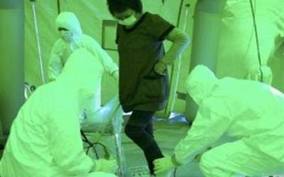
At the makeshift center set up in a gym, a steady flow of people — mostly the elderly, schoolchildren and families with babies — were met by officials wearing helmets, surgical masks and goggles.
A huge column of smoke billowed from Fukushima Daiichi's reactor 3, two days after a blast hit reactor 1.The latest explosion, said to have been caused by a hydrogen build-up, injured 11 people, one of them seriously.
Soon afterwards, the government said a third reactor at the plant had lost its cooling system.Water levels were now falling at reactor 2, which is to be doused with sea water, said government spokesman Yukio Edano.
The No 3 reactor building at the plant exploded on Monday, destroying the walls and sending a plume of white smoke into the air.But officials said the reactor remained intact, adding that there was a low possibility the blast had released radioactive material.A powerful explosion has hit a nuclear power station in north-eastern Japan which was badly damaged in Friday's devastating earthquake and tsunami.
Experts say a disaster on the scale of Chernobyl in the 1980s is highly unlikely because the reactors are built to a much higher standard and have much more rigorous safety measures.
Earlier, the prime minister said the situation at the nuclear plant was alarming, and the earthquake had thrown Japan into "the most severe crisis since World War II".The government advised people not to go to work or school on Monday because the transport network would not be able to cope with demand.
The capital Tokyo is also still experiencing regular aftershocks, amid warnings that another powerful earthquake is likely to strike very soon.
Hidehiko Nishiyama, a senior official of the Economy, Trade and Industry Ministry, indicated the reactor core in Unit 3 had melted partially, telling a news conference, "I don't think the fuel rods themselves have been spared damage," according to the Kyodo News agency.
A complete meltdown — the melting of the radioactive core — could release uranium and dangerous contaminants into the environment and pose major, widespread health risks.
The interior of a destroyed temple is seen in the earthquake and tsunami ravaged town of Natori, Migagi Prefecture, Japan, 14 March 2011. Tens of thousands of people were feared dead after last week's earthquake and tsunami in north-eastern Japan as Prime Minister Naoto Kan said 15,000 people had been rescued so far.devastating day for Japan, after a magnitude-8.9 offshore earthquake violently rattled the nation's eastern coast before unleashing a deadly tsunami that swept away cars, homes and businesses as it touched land.
Devastating Tsunami Rips Through Japan After Massive Earthquake ...At 23-foot tsunami strikes the northern coast of Japan, washing away cars and damaging buildings, after a powerful, magnitude 8.9 earthquake strikes the country.
Firemen put out a blaze at Sendai Port after a devastating earthquake and tsunami that ravaged much of Japan's Pacific East coast on 11 March 2011, Sendai, Miyagi Prefecture, Japan, March 13 2011.
The Associated Press is reporting that up to 300 bodies have already been found in the northeastern coastal city of Sendai, the city in Miyagi prefecture (state) closest to the quake's epicenter, with another 88 were confirmed killed and at least 349 still missing.
Fear of a nuclear disaster rose when thousands of residents were evacuated from an area around the Fukushima plant after radiation levels rose in the reactor. The death toll was likely to continue climbing given the scale of the temblor.
Japan - An explosion at a nuclear power station Saturday destroyed a building housing the reactor, but a radiation leak was decreasing despite fears of a meltdown from damage caused by a powerful earthquake and tsunami.
The explosion was preceded by puff of white smoke that gathered intensity until it became a huge cloud enveloping the entire facility, located in Fukushima, 20 miles (30 kilometers) from Iwaki. After the explosion, the walls of the building crumbled, leaving only a skeletal metal frame.
Tokyo Power Electric Co., the utility that runs the Fukushima Dai-ichi plant, said four workers suffered fractures and bruises and were being treated at a hospital.
More than 215,000 people were living in 1,350 temporary shelters in five prefectures, or states, the national police agency said. Since the quake, more than 1 million households have not had water, mostly concentrated in northeast. Some 4 million buildings were without power.
About 24 percent of electricity in Japan is produced by 55 nuclear power units in 17 plants and some were in trouble after the quake.
“We have confirmed that the walls of this building were what exploded, and it was not the reactor’s container that exploded,” said Edano.
The trouble began at the plant’s Unit 1 after the massive 8.9-magnitude earthquake and the tsunami it spawned knocked out power there, depriving it of its cooling system.
Smashed cars and small airplanes were jumbled up against buildings near the local airport, several miles (kilometers) from the shore. Felled trees and wooden debris lay everywhere as rescue workers coasted on boats through murky waters around flooded structures, nosing their way through a sea of debris.
According to official figures, 586 people are missing and 1,105 injured. In addition, police said between 200 and 300 bodies were found along the coast in Sendai, the biggest city in the area near the quake’s epicenter.
The transport ministry said all highways from Tokyo leading to quake-hit areas were closed, except for emergency vehicles. Mobile communications were spotty and calls to the devastated areas were going unanswered.